“I wish I had signed for Manchester United instead of Liverpool — it’s a decision I ended up regretting.”

No matter how the league table looks at any given moment, deciding between Liverpool and Manchester United is one of the toughest calls a footballer can make.
For players without a personal attachment to either side, it’s comparable to choosing a favourite child — an almost impossible task for anyone eager to establish themselves in the Premier League.
Both clubs sit atop English football’s history, their success written in countless trophies and unforgettable moments. Picking one over the other is far from straightforward; it’s like backing either horse in a two-runner race where both have elite pedigree and no guaranteed winner. Although Manchester United have endured difficult periods in recent seasons, the allure of representing a club with the stature and global appeal of the Red Devils remains powerful for many professionals.
El Hadji Diouf believed he had secured a dream switch in the opposite direction when he joined Liverpool following a sensational 2002 World Cup. Instead, the move quickly turned sour. The Senegal international had dazzled on the world stage, famously helping his country reach a shock quarter-final and delivering a man-of-the-match performance against France that propelled him into the spotlight. Convinced by his displays, Liverpool manager Gérard Houllier paid £10 million to sign him from Lens, with fellow Senegalese international Salif Diao arriving soon after.

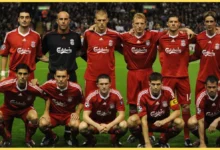
Yet by the time Diouf’s chaotic spell at Anfield came to a close, his relationship with the club was toxic on both sides. His Liverpool career left such bitterness that he later admitted he wished he had joined their greatest rivals, Manchester United, instead.
El Hadji Diouf Admits He Regretted Joining Liverpool
Given his struggles, many Reds supporters would likely agree
Scoring twice on his Anfield debut briefly raised hopes, but that promise quickly faded. Diouf found the net only six times in 80 appearances, a return that drew more frustration than celebration during one of the most controversial spells of the Premier League era. Reflecting on his career years later, the forward openly stated he would have chosen Manchester United had he been given the chance again.
In a 2018 interview with RMC Sport, Diouf was asked which club he most regretted playing for. His answer was brutally honest.
“I would say Liverpool,” he said, via the Mirror, adding:
“If I had the opportunity again, I would go to Manchester United or Barcelona. They were interested at the time as well.”
Despite scoring on his debut, the now 44-year-old failed to register another league goal until March and then went an entire Premier League season without scoring. Combined with serious discipline issues — 13 yellow cards and a red in his final campaign — his bond with Liverpool fans deteriorated rapidly.
The lowest point came during a UEFA Cup match against Celtic in March 2003, when Diouf spat at a supporter. The incident resulted in a police interview, a two-match ban, and a fine equivalent to two weeks’ wages. When Houllier left Liverpool in 2004, he openly acknowledged that signing Diouf had been one of the biggest mistakes of his managerial career. The striker is now widely regarded as one of the worst transfers in the club’s history.
Had Diouf chosen Old Trafford over Anfield, he would have collected a Premier League winner’s medal under Sir Alex Ferguson. Instead, persistent off-field issues and a lack of goals forced him to rethink his ambitions. He moved on to Bolton Wanderers in an attempt to rebuild his reputation, later following Sam Allardyce to Blackburn Rovers.
El Hadji Diouf at Liverpool
Years: 2002–2005
Appearances: 80
Goals: 6
Assists: 13
Yellow cards: 19
Red cards: 2
Why Diouf Is One of Liverpool’s Most Disliked Former Players
Even club legends had little time for him
While Diouf made no secret of his resentment toward Liverpool, the hostility from former teammates was even stronger. Jamie Carragher, who witnessed countless dressing-room characters during his career, had no hesitation in naming Diouf as the worst he ever played alongside.
Their feud has continued into retirement, spilling across interviews and social media. Carragher once summed up Diouf’s Liverpool career in scathing terms, pointing to his dreadful goal record and claiming he was often the last player selected in training. He even joked that he preferred facing Diouf as an opponent rather than playing alongside him.
Steven Gerrard echoed those sentiments in his 2007 autobiography, writing that Diouf lacked commitment and was more focused on himself than the club. Gerrard felt the striker had neither the mentality nor the willingness to sacrifice for Liverpool’s success.
Ultimately, Diouf’s self-belief far outweighed his achievements. While Carragher and Gerrard went on to lift the Champions League in 2005, Diouf’s career took a far less glamorous path, with spells at Bolton, Sunderland, Blackburn, Rangers, Doncaster, Leeds United, and later a brief stint in Malaysia before retiring in 2016.
If you want a shorter version, headline-friendly rewrite, or a Facebook post adaptation, just say the word.