How Thomas Frank is likely feeling behind the scenes about Cristian Romero and Souza’s debut

These are the main Tottenham talking points following Saturday afternoon’s 2–0 Premier League defeat at Manchester United.
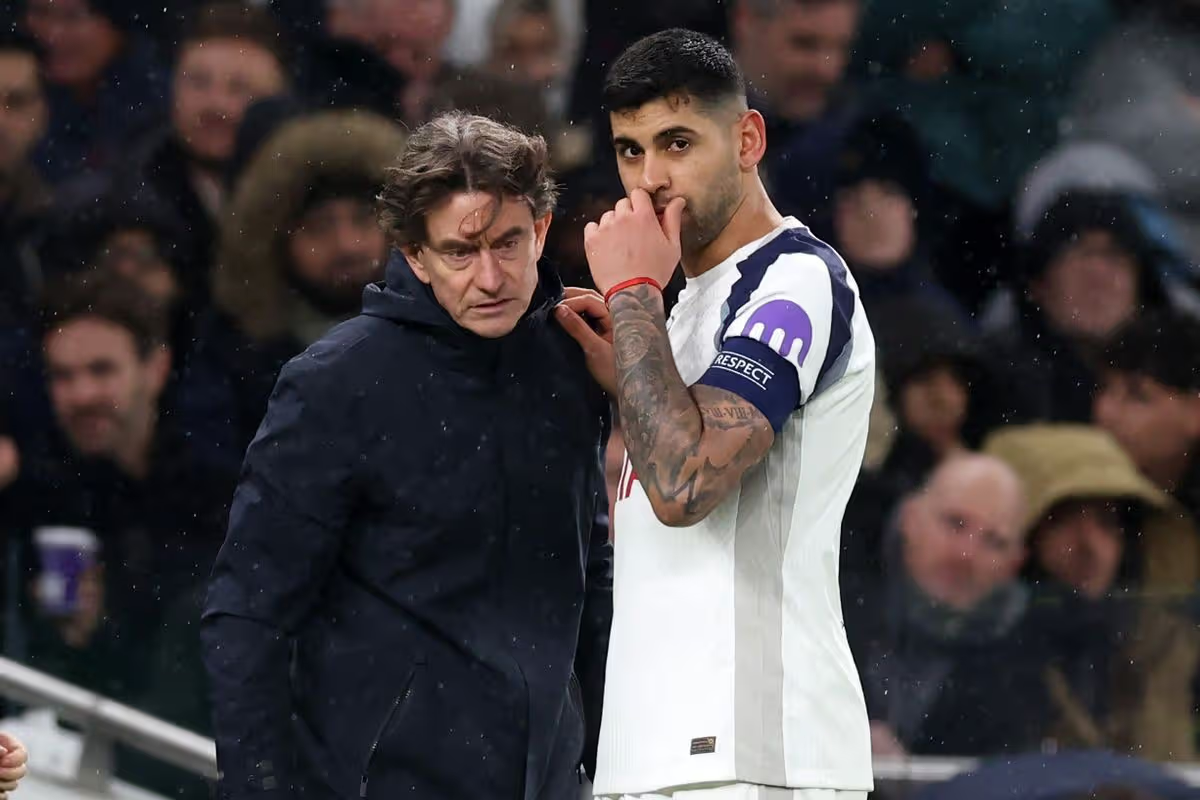
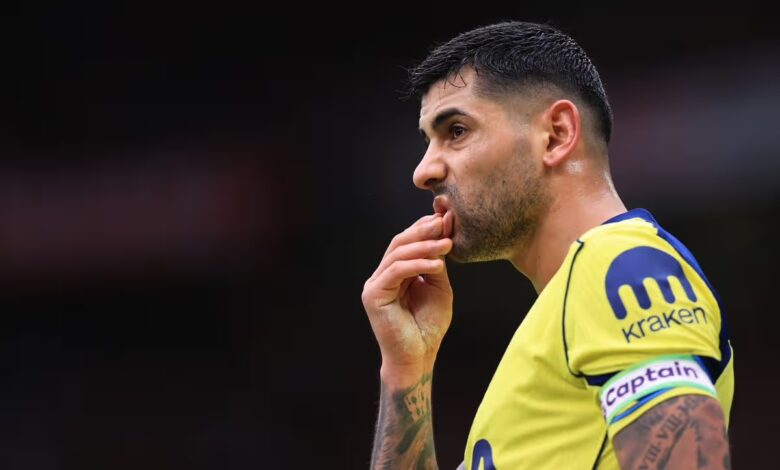
It felt inevitable that Cristian Romero’s turbulent week would take another twist, but once again the Spurs captain was the author of his own downfall. Only days after publicly criticising Tottenham’s injury crisis as “unbelievable” and “disgraceful,” Romero compounded the issue by ensuring he would also be unavailable for the next four matches.
Having spoken out forcefully on behalf of his team-mates, the Argentine endured a brutal reversal at Old Trafford. In the space of half an hour, he went from vocal leader to costly liability. Reduced to 10 men in the 29th minute, Spurs were left to fight on without their captain, who later apologised in the dressing room after recognising he had let the side down.
Romero remains a deeply divisive figure among the fanbase. His quality and commitment are unquestioned, as is his willingness to challenge the club’s hierarchy, but his brilliance is routinely undermined by moments of recklessness. This season, the line between aggression and indiscipline has become increasingly blurred.
That contrast was summed up perfectly on the journey back to London, where one vocal, worse-for-wear Spurs supporter passionately defended Romero’s aggression and importance to the team, loudly dismissing any suggestion that the defender is a liability. Not everyone shared the enthusiasm, and by the time the delayed train finally arrived at Euston, patience had worn thin. Thomas Frank may well be feeling much the same.
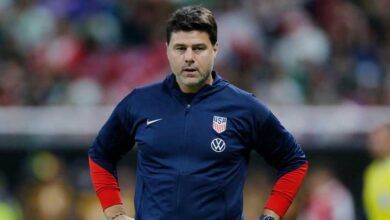
The Spurs head coach has spent much of the past week answering questions about his captain, who holds significant influence within the dressing room. Romero may not speak often, but when he does, his words carry weight. That authority only works when his actions support it—and on Saturday, they did the opposite.
The challenge that earned the red card was familiar territory. Romero attacks the ball with total commitment, often accepting collateral damage as part of the process. Frank defended his captain by insisting there was no intent to injure Casemiro, but intent has never been the issue. Romero’s problem is control, not desire.
Balancing leadership with discipline has been an ongoing struggle. This season alone, Romero has produced decisive moments at both ends of the pitch—six goals and four assists, including standout contributions against Newcastle, Dortmund, West Ham and Burnley. Few would argue against the idea that he is Tottenham’s most complete footballer. But talent is meaningless when it cannot be deployed.
The United dismissal marked Romero’s fourth suspension of the campaign, and he now sits just two yellow cards away from triggering another ban. Last season he missed 25 games through injury; this year, suspensions threaten to rob Spurs of him once again during a crucial stretch.
Goalkeeper Guglielmo Vicario revealed that Romero accepted responsibility immediately. The apology was sincere, but apologies do not recover lost points—and time is running out. When Romero returns, there may be little of the season left to salvage.
There is a persistent argument that curbing Romero’s aggression would neuter his effectiveness, but history contradicts that claim. Under Ange Postecoglou, he went long stretches without disciplinary issues. Antonio Conte famously urged him to play with “a hot heart and a cold mind,” advice that now feels more relevant than ever.
Frank acknowledged the fine line Romero walks but appeared surprised when informed that no Premier League player has been sent off more often since the defender’s arrival in England. Regardless, the consequence is unavoidable: Spurs must face Arsenal, Newcastle, Fulham and Crystal Palace without their captain, who will not return until mid-March.
Behind closed doors, Frank is likely furious. He has backed Romero publicly and privately, even as the defender repeatedly criticised the club. This was a moment that Spurs simply did not need. Up to the red card, they were competitive and organised. Once it happened, the contest was effectively over.
Despite the setback, Tottenham’s remaining players showed resilience. Vicario produced a series of outstanding saves, though he could not prevent Bryan Mbeumo’s opener, which again highlighted Spurs’ alarming habit of leaving space on the edge of their own box.
Injuries piled up too. Destiny Udogie was forced off early in the second half, adding to concerns about his long-term availability. With options limited, the situation handed a debut to 19-year-old Souza, who performed admirably under difficult circumstances. Fellow teenager Archie Gray also impressed, though he was unfortunate to be involved in United’s second goal.
Frank’s late substitutions were intended to inject energy, but they disrupted Spurs’ shape. United capitalised, sealing the win and ending any lingering hope of a comeback. In truth, the damage had been done long before.
The travelling supporters recognised the effort, applauding the players after the final whistle. Performances have improved in recent weeks, but results have not followed. Spurs now find themselves just six points clear of the relegation zone, with no reinforcements coming and their captain suspended.
Romero will remain a central talking point when he returns—if he does. His future beyond this season is uncertain, and Saturday’s events will only fuel further debate. For now, Tottenham must find a way forward without the player who is both their greatest asset and their most persistent problem.