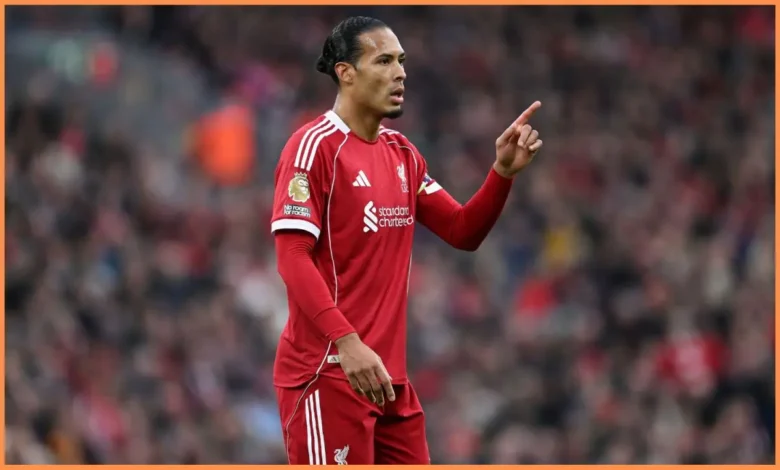
Virgil van Dijk highlighted a particular weakness following Liverpool’s loss to Nottingham Forest.

Liverpool suffered a shocking 3-0 home defeat to Nottingham Forest at Anfield, marking their sixth loss in seven Premier League matches—a run that will surely alarm both manager Arne Slot and the fans.
Despite featuring attacking talents like Alexander Isak, Mohamed Salah, and Cody Gakpo, the Reds struggled to create meaningful chances, making scoring seem like an uphill battle. Defensively, Ibrahima Konate and Virgil van Dijk had a difficult day, surprisingly so against a Forest attack that has struggled for much of the season.
Liverpool captain Virgil van Dijk openly expressed his frustration with the team’s defensive performance, particularly the ease with which they conceded goals. Speaking after the match, he said, as reported by Fabrizio Romano:
> “We are in a very difficult moment. We have to get out of it. We all take responsibility. We concede too many easy goals. They scored from a set piece again. But we were not good. In the battles, the second balls.”


Van Dijk’s candid remarks echo the concerns of many supporters, who have witnessed Liverpool’s promising start to the season deteriorate. The team has struggled to maintain defensive solidity, often conceding avoidable goals from set pieces and losing structure under pressure—issues reminiscent of the latter part of the Klopp era.
The Dutch defender, who has also faced his own form challenges this season, emphasized that the problems are collective rather than individual. His comments reflect a dressing room eager to regain intensity and discipline, though achieving that appears to be a work in progress.
Injuries have compounded Liverpool’s difficulties, with Jeremie Frimpong and Conor Bradley unavailable against Forest. Meanwhile, Konate’s performances have raised significant concerns, culminating in his second-half substitution—though even that could not prevent further defensive lapses.
Manager Arne Slot did not shy away from criticism either, admitting plainly after the match that “that didn’t really work out.”